


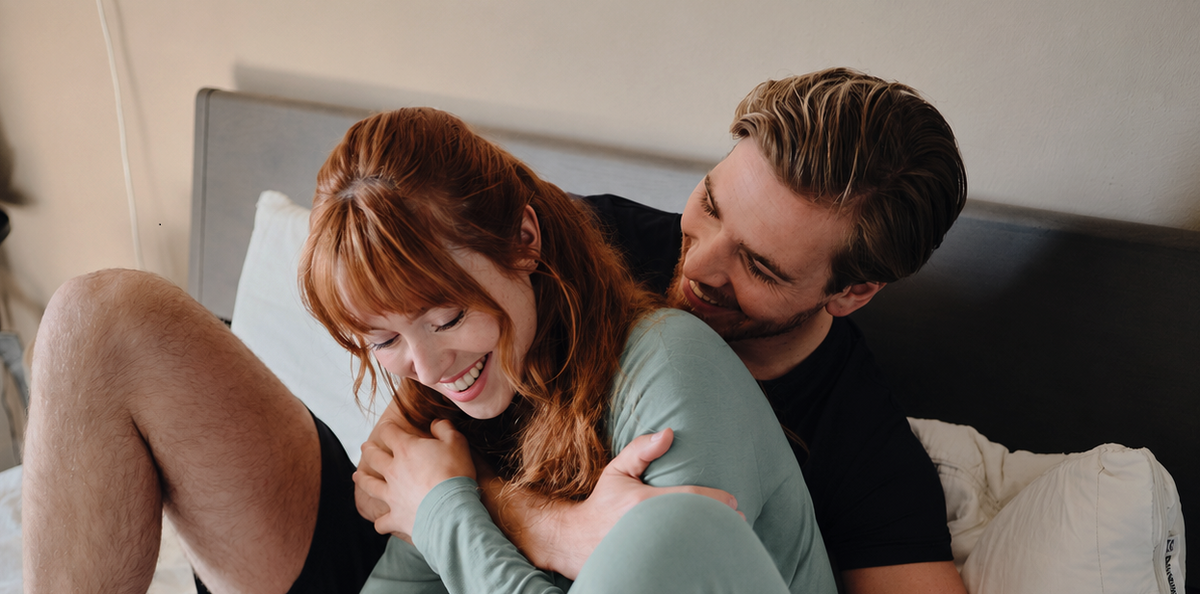
There it is: a wonderfully thick, fluffy winter pyjama. The kind you'd love to snuggle into on a cold evening. Love at first sight! But once you're home, tucked up under your warm duvet, that promising purchase turns out to be less than perfect. Before you know it, you're far too hot, your pyjama bottoms are twisted around your legs, and you're wondering why on earth you fell for that fluffy number in the first place.
Well, looks aren't everything. Especially when you're planning to spend quite a few nights together. Because a good winter pyjama needs more than just a high cuddle factor. So what else should you look for? We're happy to help you find out!
Not everything that looks warm and soft is actually comfortable
In winter, it's tempting to choose the thickest, warmest pyjama you can find. But think about it: you're probably already sleeping under a lovely warm duvet. Does your pyjama really need to add even more warmth?
The material makes a world of difference, too. Take fleece, for example. Wonderfully soft and cosy, but usually made from polyester. And because fleece is highly insulating, you can quickly become too warm under a thick winter duvet. Flannel is another winter favourite for many people. It's often made from brushed cotton, which gives it that wonderfully soft and warm feel. It absorbs moisture well, but the downside is that it takes relatively long to dry.
And then there's viscose made from bamboo cellulose (also known as bamboo viscose). Quite a mouthful, but the result is a wonderfully soft, flexible fabric that feels lovely against your skin. The fabric absorbs moisture well and feels incredibly comfortable to wear. That's what makes a pyjama from Bamboo Basics such a great choice, even in winter. Because a good night's sleep isn't about wrapping yourself up in as many thick layers as possible. It's about feeling comfortable all night long.
A good 'relationship' starts with a little freedom to move
You probably know the feeling. You want to turn over in bed, but your pyjama bottoms have other plans. One trouser leg has somehow ended up halfway up your calf, the front of your shirt is now on your back, and your elastic waistband is practically under your armpits.
Not exactly a dream relationship, is it?
A good pyjama should move with you, without you having to adjust it all night long. So don't just pay attention to the size, but also to the fit. Your pyjama bottoms can be a little loose, as long as they don't constantly slip down. And the waistband should fit comfortably without digging into your stomach.
The fabric also plays an important role. A soft, flexible material moves comfortably with your body as you change positions. And that's exactly what makes Bamboo Basics pyjamas so lovely to wear. No stiff, heavy fabrics, just wonderfully soft material that gives you all the freedom you need to find your favourite sleeping position. Even if it looks like a complicated yoga pose to everyone else.
Warmly recommended, but preferably without overheating
Did you know that your body temperature naturally drops as you fall asleep? It's part of your biological sleep-wake cycle. Your body is essentially preparing itself for the night. A bedroom that isn't too warm can support this natural process.
For many adults, a comfortable bedroom temperature is somewhere around 16 to 19 degrees Celsius, although this naturally varies from person to person. But winter sometimes creates a funny contradiction: we turn down the heating to sleep in a nice, cool room, only to climb under a thick duvet wearing an equally thick pyjama.
And before you know it, you're wrestling with your duvet in the middle of the night.
That's why it's a good idea to match your nightwear to the rest of your bedding. Do you have a wonderfully warm winter duvet? Then your pyjama might not need to be particularly thick. Prefer sleeping under a lighter duvet or always keep your bedroom window open? In that case, a long-sleeved pyjama set can be especially comfortable.
Ultimately, it's all about finding the right combination. Your duvet provides most of the insulation, while your pyjama should mainly feel comfortable against your skin. And if you regularly get too warm at night, a fabric that absorbs moisture well is an added bonus.
Winter pyjamas for women and men: what should you look for?
So, we've established that the thickest pyjama isn't automatically the best. But how do you recognise one you'll genuinely love wearing?
Start with the fabric. It should feel pleasant against your skin, drape comfortably and not be unnecessarily heavy. Next, pay attention to the fit. Can you move your arms easily? Does the waistband feel comfortable? And do the trouser legs stay more or less in place when you lie down?
The length is worth considering, too. Long pyjama bottoms and a long-sleeved top are wonderfully comfortable in winter, especially if your bedroom is quite chilly. But do you tend to get warm at night? Then a combination of long bottoms and a short-sleeved top might work better.
For anyone who likes to go to bed feeling comfortable and looking a little stylish, a soft pair of women's pyjamas makes a lovely addition to your winter wardrobe. After all, why should you only care about what you wear during the day?
And gentlemen, you don't have to settle for that old, stretched-out T-shirt that used to be white. A comfortable pair of men's pyjamas isn't just great for sleeping, it's also perfect for a lazy Sunday morning when you're not quite ready to get dressed.
One more tip: don't just judge how a pyjama looks when you're standing straight in front of the mirror. Try sitting down, pulling your knees up and moving your arms around. Because something that looks amazing in the fitting room should also feel comfortable when you're curled up in bed.
Looking for a long-lasting 'relationship'? Check the care label, too
You've found your ideal winter pyjama – probably one from Bamboo Basics. It fits perfectly, feels wonderfully soft, and you want to wear it every evening. Naturally, you also want it to stay looking great for as long as possible.
Luckily, that's not complicated at all. The most important thing is to follow the care label. For many bamboo viscose pyjamas, a gentle wash cycle at 30 degrees Celsius is generally suitable, but always check the specific washing instructions for your garment to be sure.
Try not to use too much detergent and preferably skip the fabric softener. And although it might be tempting to throw your bamboo pyjama straight into the tumble dryer after washing, letting it air-dry naturally is often a better choice. This helps prevent unnecessary wear caused by the heat and movement of the dryer.
How often you should wash your pyjama depends on several factors, including how much you sweat, whether you wear underwear and how many nights in a row you wear it. As a general guideline, washing your pyjama after around three to four nights works well for many people. If you tend to sweat a lot, washing it more frequently is naturally a good idea.
And perhaps the best tip of all: make sure you have at least two comfortable pyjamas. That way, you'll never be without your favourite when it's in the wash.
Go ahead, sleep on it
Choosing a good winter pyjama is actually a little like starting a new relationship. You want something that suits you, gives you plenty of freedom and makes you feel comfortable every single evening. And a little softness never hurts, either.
So don't be tempted by that thick, fluffy number in the shop just because it looks cosy. Look beyond appearances and choose a fabric and fit that genuinely help you sleep comfortably.
Curious to find your perfect match? Discover the soft, comfortable pyjamas from Bamboo Basics. Who knows? It might just be love at first night.
Sweet dreams!


